
Last updated October 15, 2026
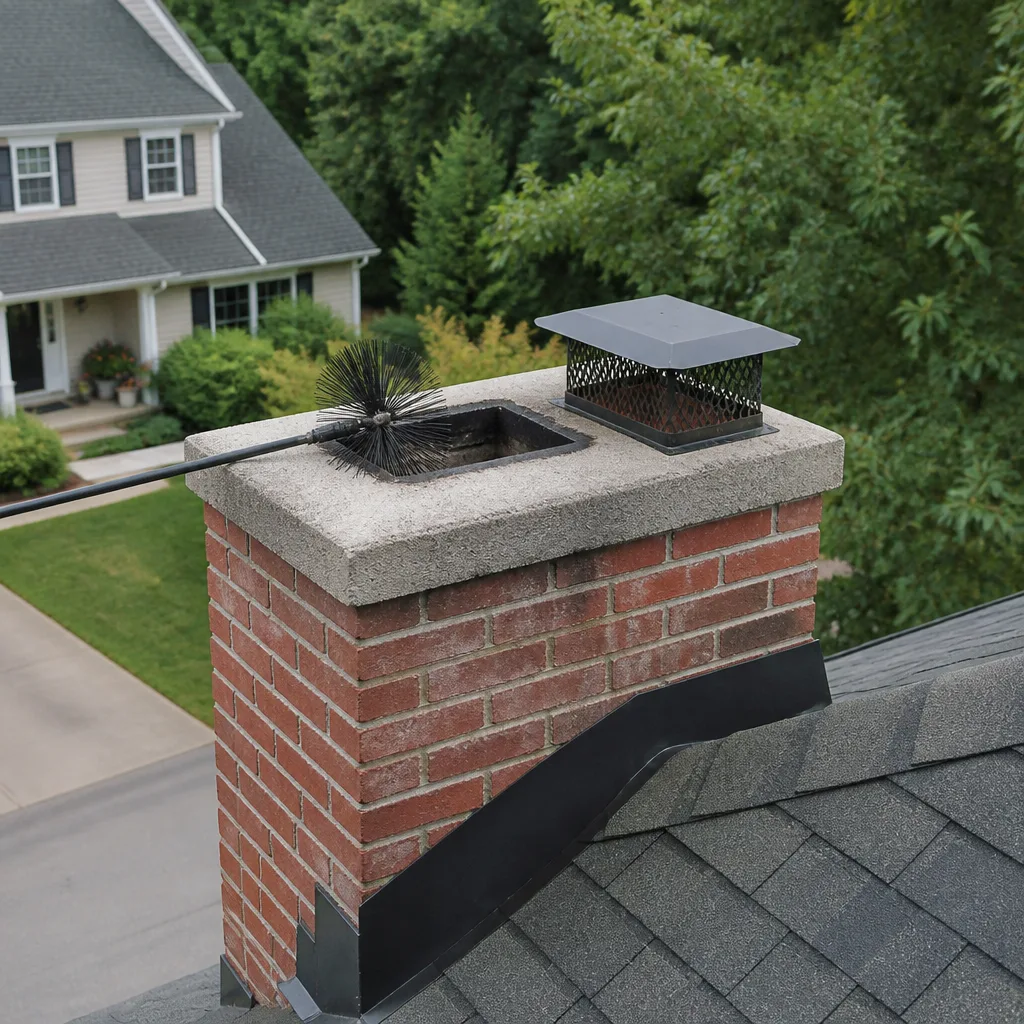 Sweep & inspection
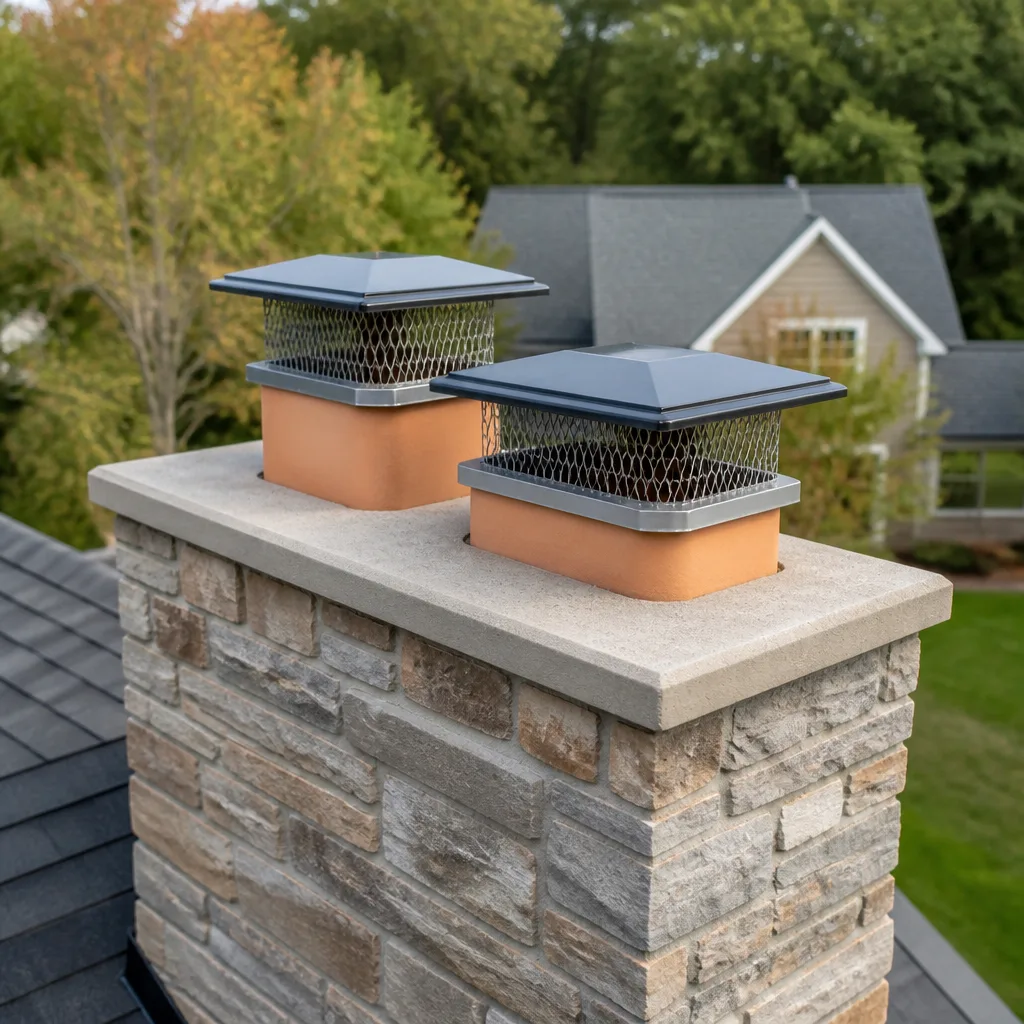 Caps & crowns
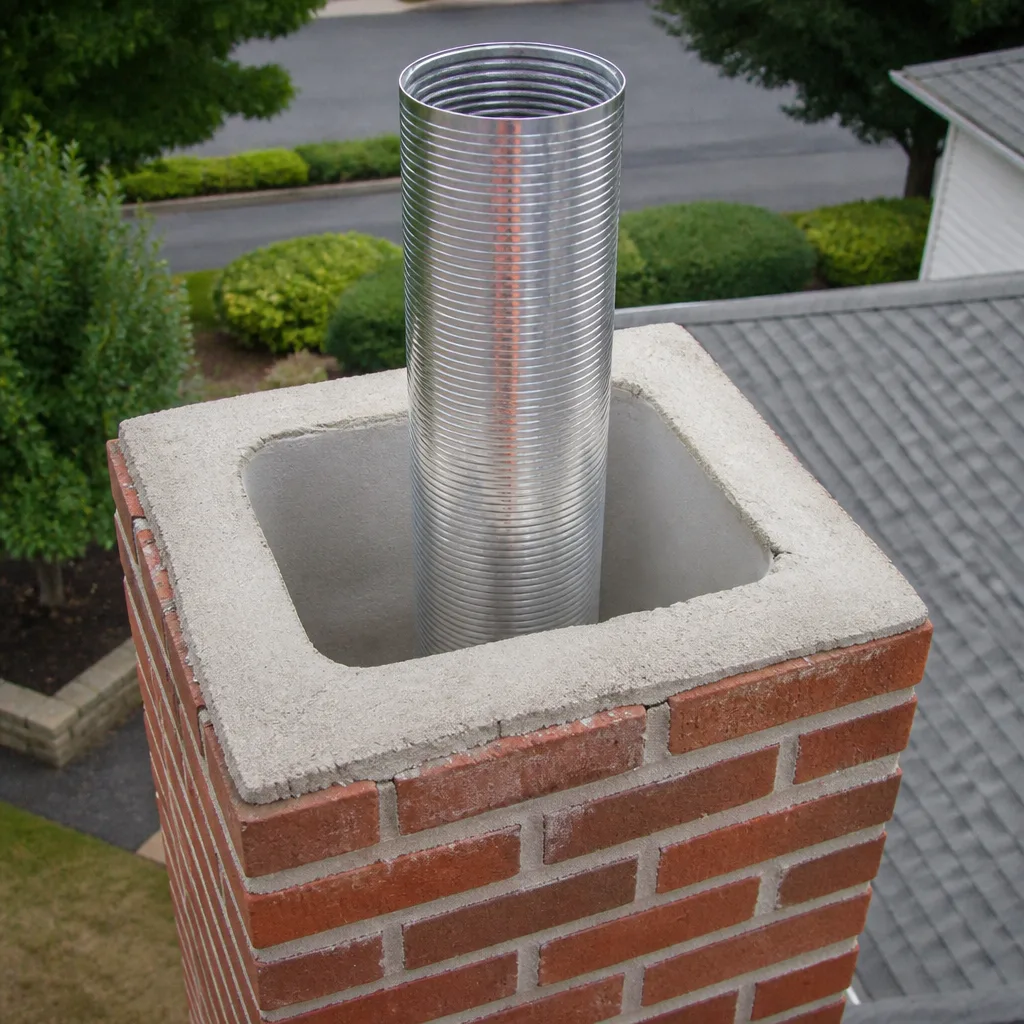 Flue relining
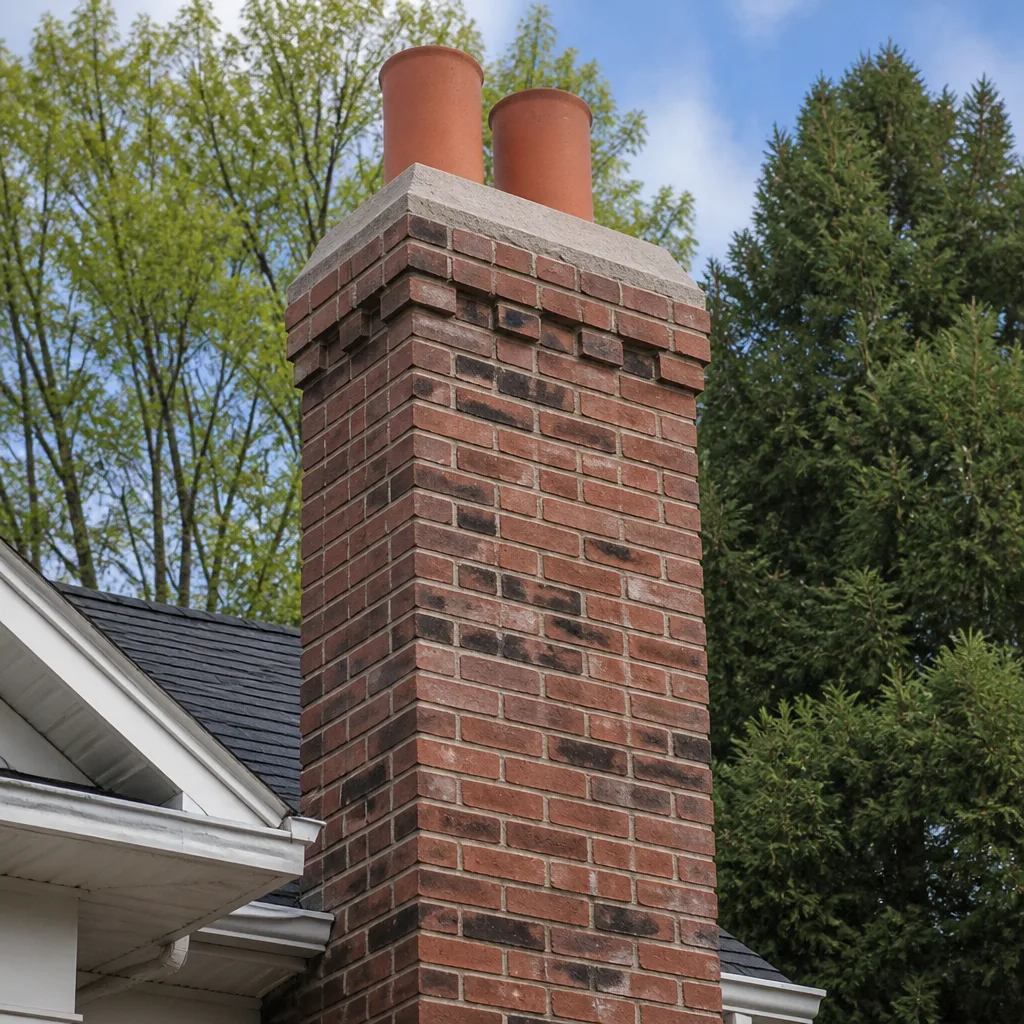 Masonry repair
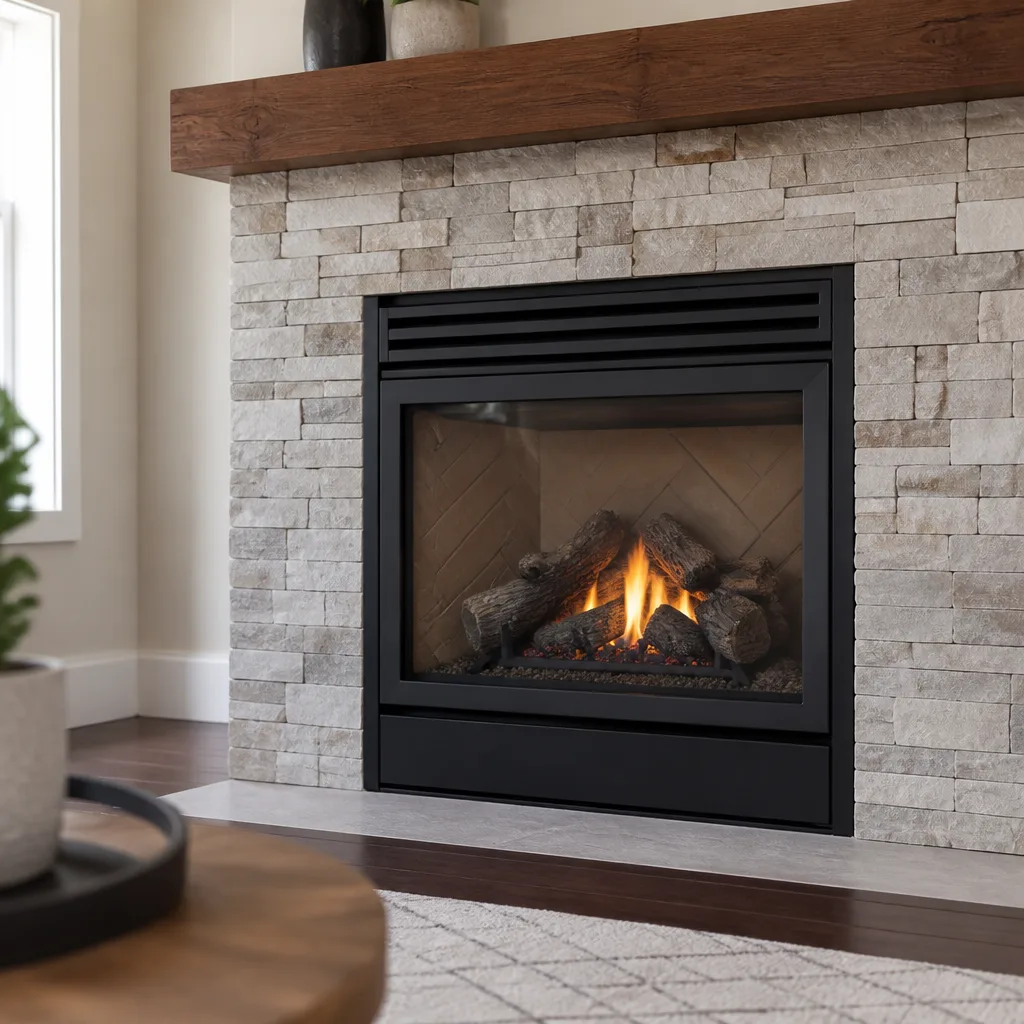 Gas fireplace service
Level 1 sweep and inspection to the NFPA 211 annual standard - flue, crown, cap, and flashing checked and photographed
Chimney sweep logs do not sweep chimneys. They loosen some creosote - which then falls where a brush and vacuum still have to collect it.
DIY vs Professional Chimney Cleaning: The Sacramento Homeowner’s Decision Guide
You can buy the same rotary brush kit a chimney sweep uses for $80 on Amazon. The brush will knock loose some soot. What it won’t do is tell you whether the terracotta liner behind that soot is cracked, whether the smoke chamber is coated in Stage 2 creosote, or whether the stucco chase cover on your roof has been quietly letting water into your attic since last winter. In Sacramento, where 1950s and 1960s ranch homes dominate neighborhoods like Arden-Arcade, Carmichael, and South Land Park, those hidden conditions are common. This guide walks through exactly what DIY chimney cleaning can and cannot accomplish, what it costs either way-see our Chimney Cleaning Cost Breakdown: The Sacramento Homeowner’s Reference for 2026 for full pricing details-and how the decision affects your homeowner’s insurance if something goes wrong.
Quick Answer
For most Sacramento homeowners, the honest answer is this: DIY brushing can remove loose Stage 1 creosote from a straight, accessible flue, but it cannot replace a professional chimney sweep because it cannot inspect the liner, smoke chamber, or exterior chase for damage that a brush will never reveal. A professional sweep in Sacramento typically runs $150 to $250 and includes the inspection documentation your insurer will ask for if a chimney fire ever occurs. If your flue is straight, your liner is stainless steel, and you clean it every year before burning season, light DIY maintenance between professional visits is reasonable. If any of those conditions is not true, the $80 brush kit is a false economy.
Styles & brands we work with
Table of Contents
- What DIY Chimney Cleaning Actually Accomplishes
- What DIY Cannot Do: The Inspection Gap
- Sacramento-Specific Conditions That Make DIY Riskier
- The Real Cost Comparison: DIY vs Professional in Sacramento
- How DIY Sweeping Affects Your Homeowner’s Insurance
- The Middle Ground: Professional Sweeps with Homeowner Maintenance
- What a Written Care Promise Means in the DIY Comparison
What DIY Chimney Cleaning Actually Accomplishes
Let’s start with what a rotary brush kit from Amazon or Home Depot genuinely does well. If you have a straight flue, meaning no offsets or bends between the firebox and the chimney cap, a brush on flexible rods will remove loose soot and powdery Stage 1 creosote from the flue walls. Stage 1 creosote is the flaky, dust-like deposit that forms during normal wood burning. It’s what most people picture when they think about cleaning a chimney, and it’s the one type of deposit a brush can actually address.
When we sweep a chimney in Sacramento, the brushing portion of the job usually takes 30 to 45 minutes. The rest of the visit is inspection, documentation, and cleanup. Here is what a DIY brush job realistically covers:
- Loose soot removal from straight flue sections in the first 15 to 20 feet above the firebox.
- Stage 1 creosote reduction on flue walls, assuming the deposits are fresh and powdery.
- Visual confirmation of what you can see from the top of the chimney looking down, if you are comfortable on a ladder.
- Basic firebox cleaning with a shop vacuum and drop cloths.
That is the complete list. If your flue is straight, your deposits are light, and you do this every single year before burning season, DIY maintenance can keep a chimney in serviceable condition between professional inspections. The problem in Sacramento is that most chimneys are older, most flues are not perfectly straight, and most homeowners are not inspecting anything, they are just brushing.
What DIY Cannot Do: The Inspection Gap
The brush removes soot. It does not remove the question of whether the chimney is safe to use. That question requires looking at the liner, the smoke chamber, the crown, the chase cover, and the flashing. Here is what a professional Chimney Inspection in Sacramento includes that a brush kit never will:
Stage 2 and Stage 3 Creosote
Stage 2 creosote is the shiny, tar-like deposit that forms when flue temperatures run low and wood is burned incompletely. It looks like black glass and a brush will not remove it. In fact, running a brush over Stage 2 creosote can polish the surface and make it harder to remove later. Stage 3 creosote is the thick, hardened, candle-wax-like buildup that requires chemical treatment, rotary chain loops, or professional-grade tools. If your chimney has Stage 2 or Stage 3 deposits, no DIY kit on the market will clean it.
The Smoke Chamber
Above the firebox and below the flue sits the smoke chamber, a sloped area where creosote accumulates heavily because smoke slows and cools there. Most DIY kits cannot reach the smoke chamber effectively. Our technicians use specialized vacuum and brushing tools to clean this area, which in Sacramento ranch homes built between 1950 and 1975 is often corbeled brick with dozens of ledges where creosote builds up.
The Liner
This is the inspection gap that matters most. A cracked terracotta liner is invisible behind soot. You cannot see it with a brush, you cannot see it with a flashlight from the roof, and you cannot see it with a phone camera dropped down the flue on a string. You need a proper inspection, ideally with a camera, to identify cracks, gaps, or spalling. When a terracotta liner cracks, the chimney can vent heat and gases into the framing around it. That is a fire risk and a carbon monoxide risk, and it is the single most common serious condition we find in Sacramento homes built before 1980.
Sacramento-Specific Conditions That Make DIY Riskier
Sacramento’s housing stock is distinct, and it creates specific conditions that make DIY chimney work more error-prone here than in other parts of the country.
Offset Flues in 1950s to 1970s Ranch Homes
Homes in neighborhoods like Tahoe Park, Colonial Heights, and North Highlands were frequently built with offset flues, meaning the chimney shifts direction between floors to accommodate attic framing or roofline changes. An offset flue means the brush cannot pass straight through. When a DIY homeowner hits an offset and pushes harder, the brush or rods can gouge the flue wall, snag on the offset, or come apart inside the chimney. What started as an $80 cleaning weekend becomes a service call to retrieve a stuck brush head. We’ve retrieved brush heads and rods from Sacramento chimneys more times than we can count.
Stucco Chase Covers That Hide Damage
Many Sacramento homes, particularly in newer developments in Natomas, Elk Grove, and Folsom, have factory-built or masonry chimneys with stucco-finished chases. Stucco cracks, and when it does, water gets into the chase and rots the framing or rusts the metal flue inside. From the ground, the stucco looks fine. From the roof, you can see the hairline cracks. Most DIYers never go on the roof, and if they do, they are not trained to read stucco cracking patterns. The first sign is often a water stain on the ceiling, at which point the repair is significantly more expensive.
Terracotta Liners Common in Sacramento
Sacramento homes built before 1980 almost universally used terracotta clay flue liners. Terracotta is durable but brittle. It cracks with age, with chimney fires, with seismic movement, and with water freeze-thaw cycles. A cracked terracotta liner behind creosote is invisible to the naked eye. We use camera inspection on most Service calls because the condition of the liner determines whether the chimney is safe to use at all. No DIY method can assess this, and guessing wrong carries real risk.
The Real Cost Comparison: DIY vs Professional in Sacramento
Here is the straight math, using Sacramento market pricing as of 2025:
- DIY rotary brush kit: $50 to $120 on Amazon, plus a shop vacuum, drop cloths, and ladder if you do not already own them.
- Professional chimney sweep in Sacramento: $150 to $250 for a standard open-masonry fireplace with a straight or single-offset flue. Larger homes, double flues, or heavy Stage 2/3 deposits run $250 to $400.
- Chimney inspection with the sweep: Included in most professional sweeps. A standalone Level 2 camera inspection runs $150 to $300.
- Liner replacement if damage is found late: $2,500 to $6,000 in the Sacramento market, depending on flue length and access.
- Chimney fire claim denied for lack of maintenance records: The entire cost of the fire, which is the scenario we are about to address.
Kindling Chimney Sacramento delivers a written price before any work starts, every time. You will know the cost of the sweep and any recommended repairs before you decide anything. For a free estimate, call (279) 243-2173.
How DIY Sweeping Affects Your Homeowner’s Insurance
This is the section most DIY-versus-professional guides skip, and it is the part that matters most for Sacramento homeowners. If a chimney fire occurs, your insurer will investigate. They will ask for documentation that the chimney was maintained. What they mean is this:
- When was the chimney last swept? They want a date, not a vague “last fall.”
- Who performed the sweep? They want a company name, a technician name, and a receipt or invoice.
- Was an inspection performed, and what did it find? They want a written report showing the chimney was in safe operating condition.
- Were any recommended repairs completed? If a sweep found an issue and you ignored it, the claim may be denied for negligence.
If you DIY your chimney cleaning, you have no receipt, no report, and no third-party corroboration that the chimney was maintained. The insurer’s position in that scenario is predictable: the homeowner self-performed maintenance with no documentation, and no professional inspection was ever completed. A denied claim means the homeowner pays for the fire damage out of pocket. The $130 you saved on a sweep is not the issue when the claim is $40,000.
This is the detectability problem. The brush does not detect damage. The insurer wants to know the damage was detected. Those are different things, and only one of them protects the house.
The Middle Ground: Professional Sweeps with Homeowner Maintenance
The honest answer is not all-or-nothing. Some Sacramento homeowners can reasonably do light maintenance themselves, provided a professional sweep and inspection happens on schedule. Here is the split we recommend:
Tasks That Stay on the Professional Side
- Annual chimney sweep before burning season, every year the fireplace is used.
- Level 2 camera inspection every 2 to 3 years, or any time the home changes ownership, the chimney has been dormant for years, or a chimney fire has occurred.
- Any work on the roof, liner, chase cover, crown, or masonry. These are not DIY tasks for anyone without roofing and masonry experience.
- Assessment of Stage 2 or Stage 3 creosote. Only a professional can correctly identify the stage and choose the removal method.
Tasks a Careful Homeowner Can Do Between Sweeps
- Visual firebox checks before each burn: look for loose bricks, crumbling mortar, or debris.
- Damper operation testing to confirm it opens, closes, and seals properly.
- Smoke test on the first cold fire of the season: light a small piece of newspaper and watch whether smoke draws up or spills into the room.
- Keeping the hearth clear of combustible materials, pet beds, and holiday decorations during burning season.
- Monitoring for changes between professional visits: water stains on ceilings near the chimney, unusual odors, or creosote flakes falling into the firebox.
This split keeps the inspection burden on the professional side, where it belongs, while giving homeowners meaningful, safe involvement in their fireplace maintenance.
What a Written Care Promise Means in the DIY Comparison
There is one more difference between DIY and professional sweeping that rarely gets mentioned: accountability. When you clean your own chimney and the brick is scratched, the carpet is stained, or the job is incomplete, the only person to answer to is yourself. When you hire Kindling Chimney Sacramento, you get the Cedarwell Care Promise in writing. Shoe covers and drop cloths go down on arrival, nothing is moved without asking, and a photo of the clean-up is taken before the crew leaves. That matters for Sacramento families with kids and pets who care as much about how the house is left as about how the chimney was cleaned.
The promise also covers the workmanship. Our 365-Day Done Right Promise means if the sweep or repair is not done right, we make it right. No fine print, no runaround. That is a simple sentence, but it represents the difference between hiring a company that stands behind the work and buying a brush kit that comes with no responsibility at all.
Our technicians are background-checked and arrive in uniform. A live person answers the phone 24 hours a day, 7 days a week. For fireplace repair work in Sacramento, we use professional-grade materials from brands like Olympia Chimney, Gelco, and Copperfield, so repairs are built to last rather than patched to hold.
Common Mistakes to Avoid
- Brushing an offset flue with a rigid rod kit. Sacramento ranch homes from the 1950s to 1970s frequently have offset flues. Stiff rods can gouge the flue or come apart inside the chimney.
- Assuming a brush removes all creosote. Stage 2 and Stage 3 creosote require chemical treatment or rotary tools. A brush polishes it, which makes professional removal harder later.
- Skipping the inspection because the chimney “looked fine.” The dangerous conditions are hidden behind soot, inside the smoke chamber, and under the stucco chase cover on the roof.
- Cleaning from the bottom without sealing the firebox. Soot will find its way into the living room. Professional sweeps use vacuum systems and sealing procedures to contain the dust.
- Not documenting anything. If a fire occurs, your insurer will ask for maintenance records. “I cleaned it myself” is not documentation.
- Waiting until burning season to schedule. Sacramento sweeps book out in October and November. Schedule in August or September and you will get your preferred date.
- Climbing onto a Sacramento roof without proper fall protection. Tile roofs are common here and they are unforgiving. Professional sweeps carry the right equipment and training.
See the difference
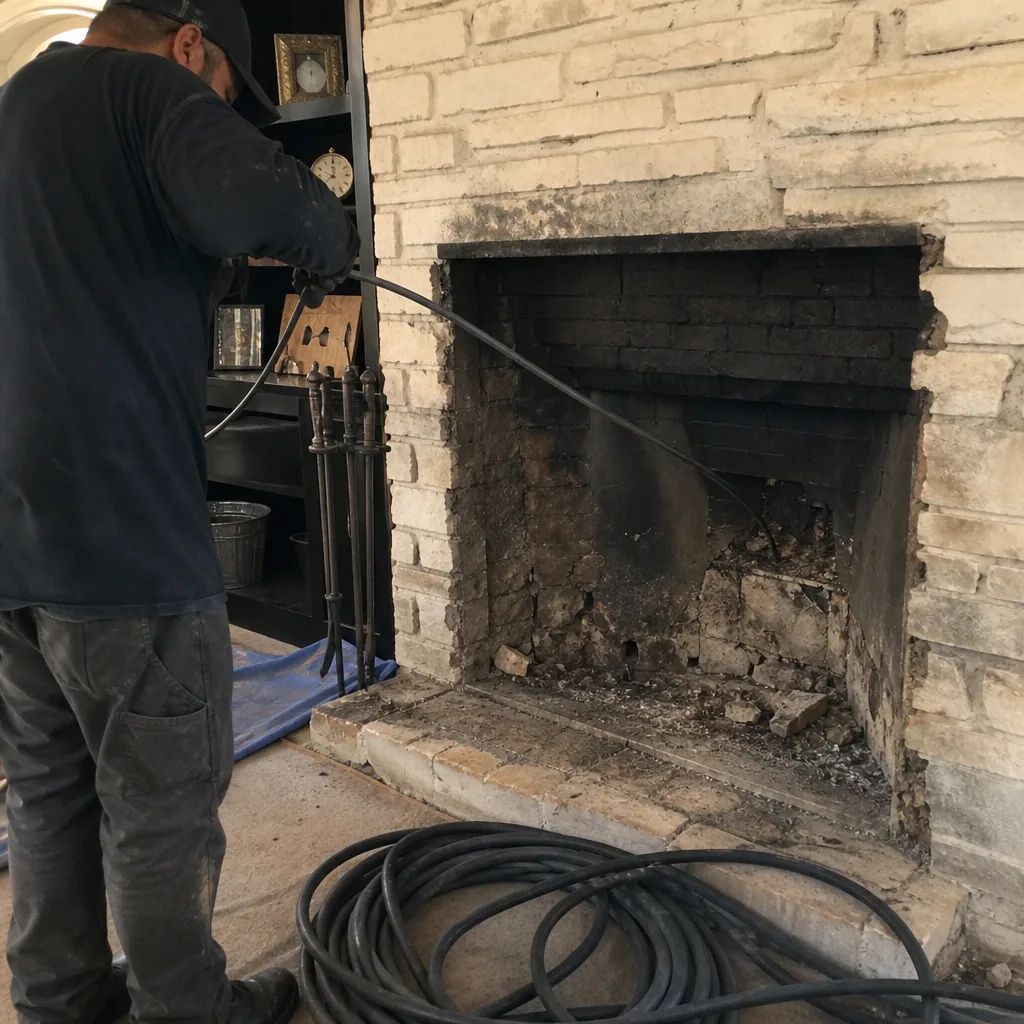 Before
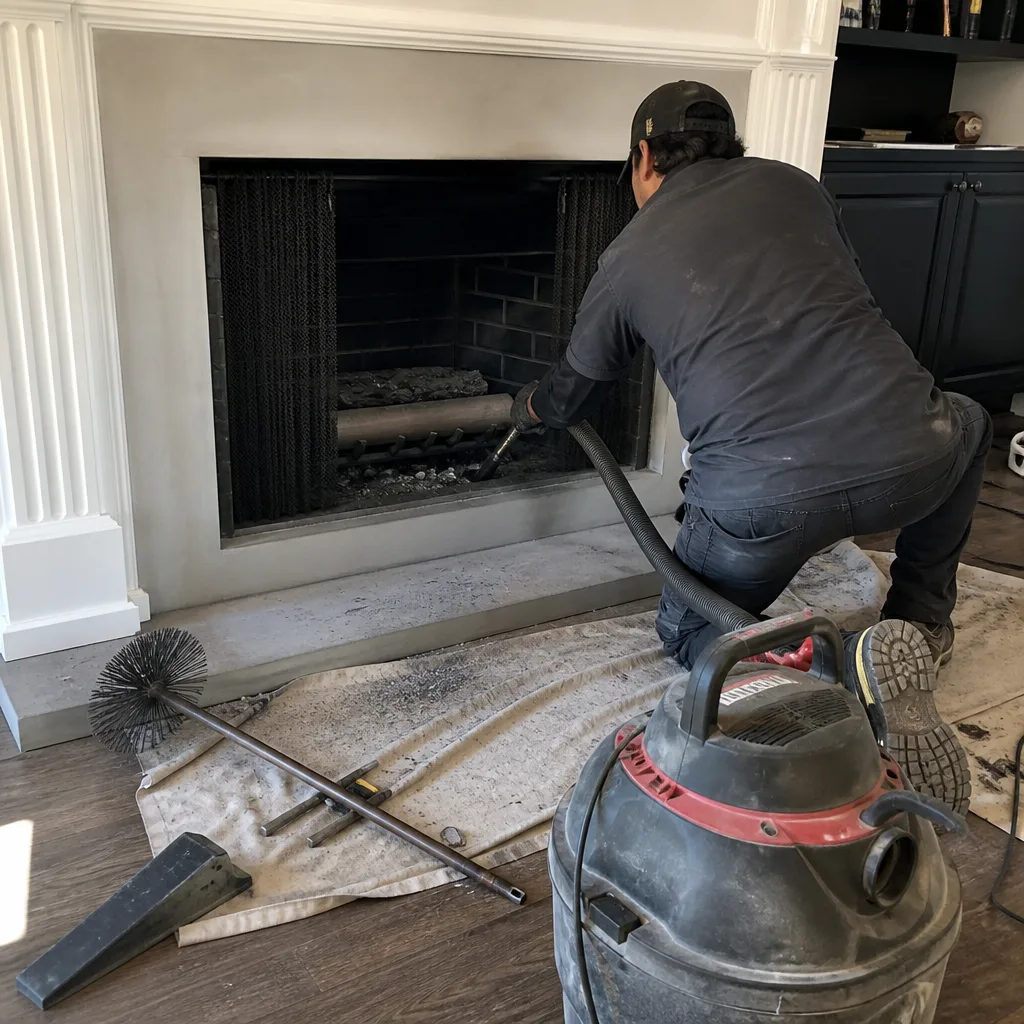 After
After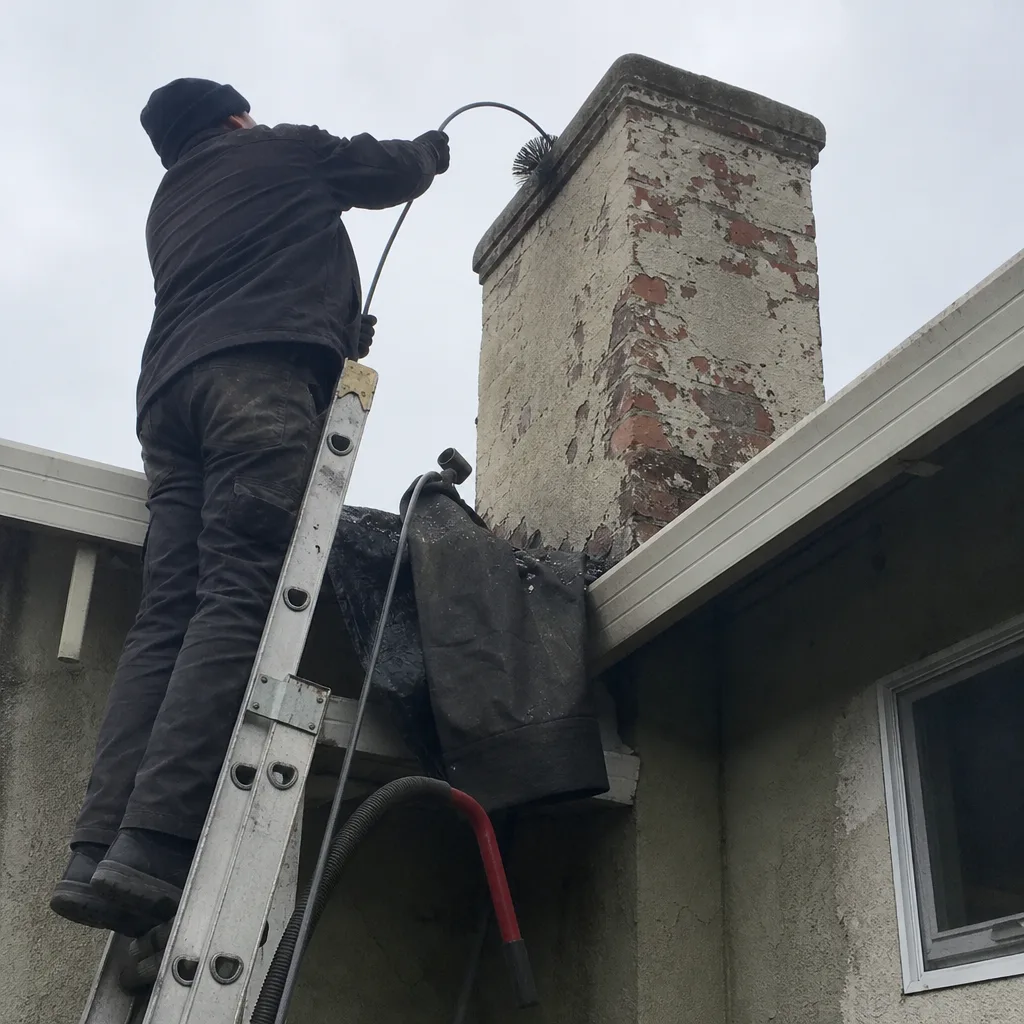 Before
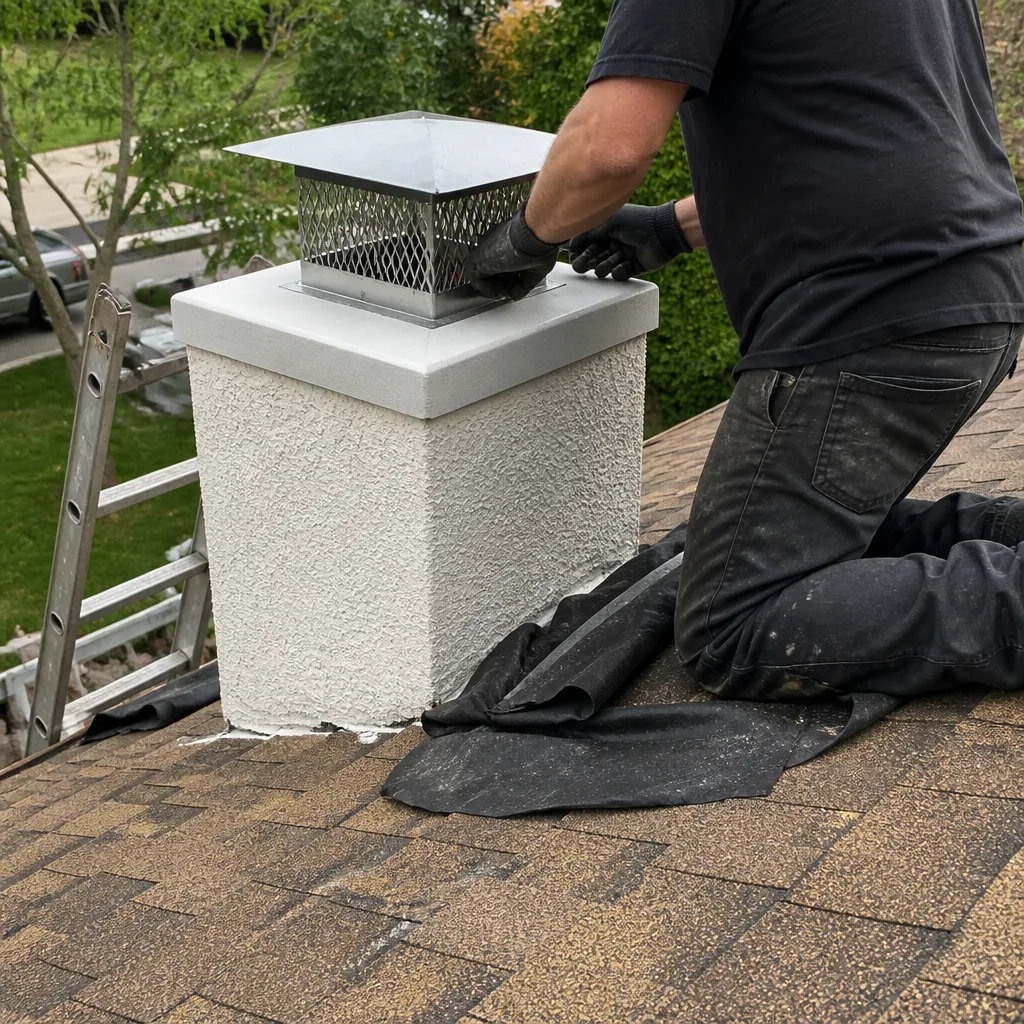 After
After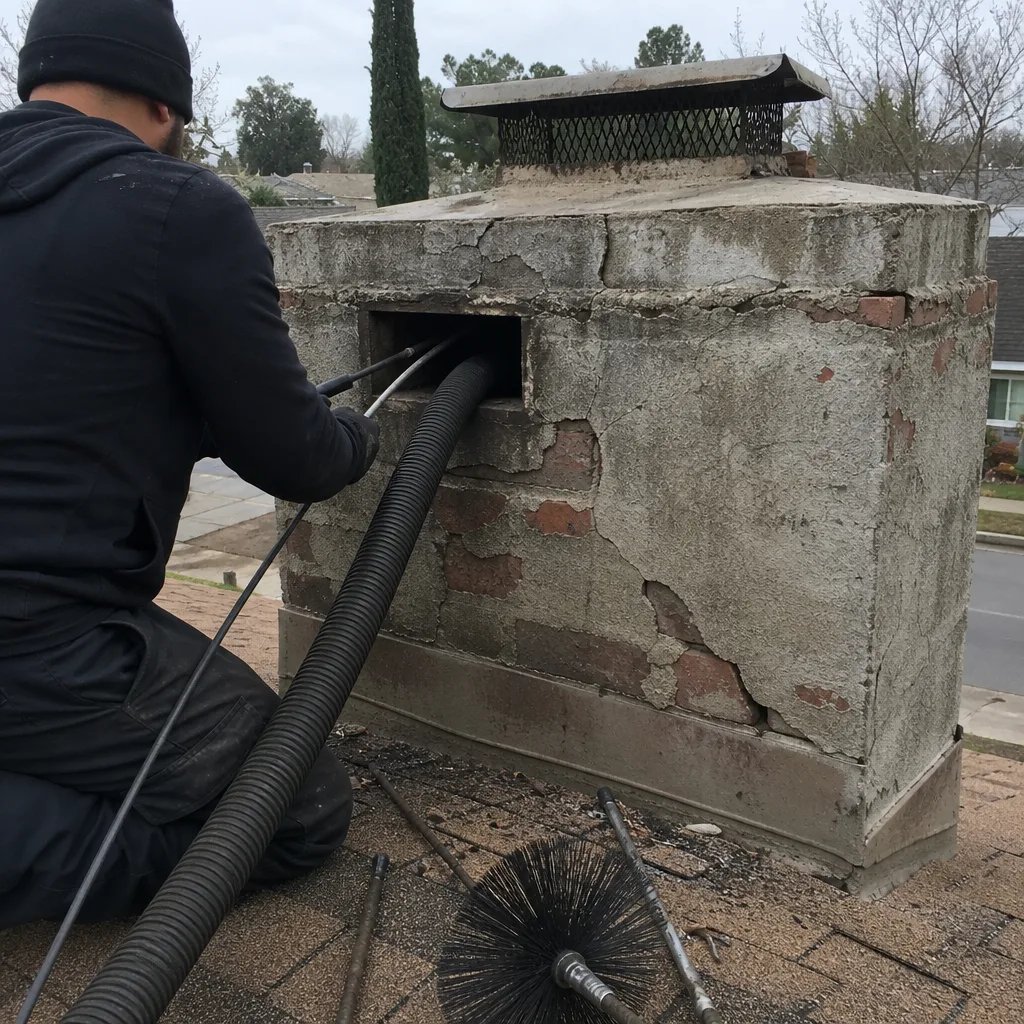 Before
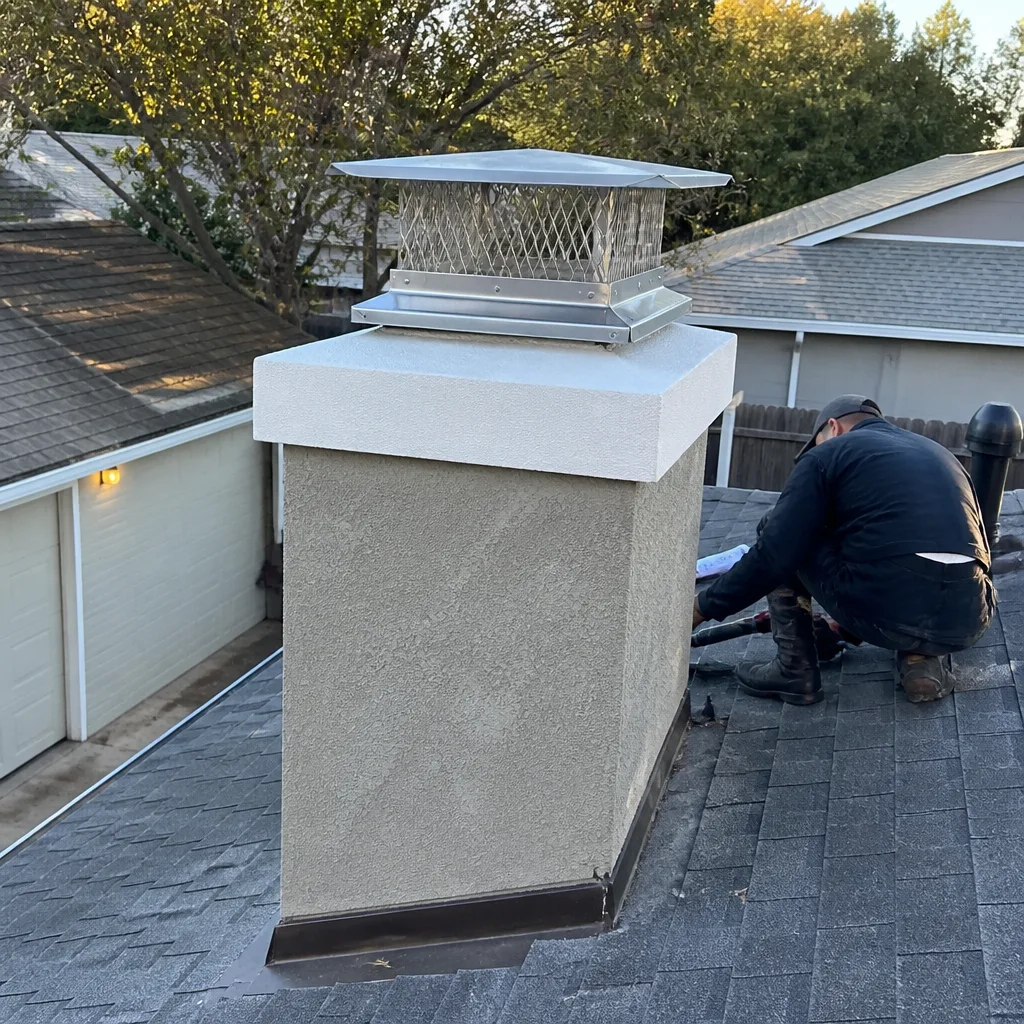 After
AfterWhen to Call a Professional
Call a professional if your chimney has not been swept in two or more years, if you notice a strong smoky odor when the fireplace is not in use, if you see black tar-like buildup in the firebox, if your home was built before 1980 and the liner has never been inspected, or if you have had a chimney fire of any size. These are not conditions to brush through. They require trained eyes and camera inspection. Kindling Chimney Sacramento offers free estimates in Sacramento – call (279) 243-2173 and a live person will answer.
Frequently Asked Questions
A standard chimney sweep in Sacramento costs $150 to $250 for a single-flue open fireplace. Homes with double flues, heavy creosote buildup, or unusual access run $250 to $400. Call (279) 243-2173 for an exact written quote – estimates are free.
You can safely brush a straight flue with light Stage 1 creosote if you are comfortable on a ladder and have the right tools, but you cannot inspect the liner, smoke chamber, or chase cover, and those are the parts that determine whether the chimney is safe to use. If you DIY, schedule a professional inspection at least every two years.
Every year before burning season if you use the fireplace regularly. Sacramento’s burning season runs roughly November through February, and the wet winters mean any water intrusion has months to cause damage before the next sweep catches it.
Yes. The inspection is the part that catches cracked terracotta liners, damaged smoke chambers, and stucco chase cover failure. The brush only removes soot. In our experience in Sacramento, the inspection is where the real value of the service lives.
Your insurer will ask for maintenance records, including the name of the company that performed the last sweep and the date. Without third-party documentation, a claim can be denied on the grounds of insufficient maintenance. A professional sweep receipt and inspection report are your evidence.
It is our written commitment that shoe covers and drop cloths go down on arrival, nothing is moved without asking, a photo of the clean-up is taken before the crew leaves, and a written price is delivered before any work begins. Every Kindling Chimney Sacramento job includes it.
The Bottom Line
The DIY versus professional chimney cleaning question is not really about saving $130. It is about whether anyone is looking for the problems a brush cannot find. In Sacramento, where older terracotta-lined flues, offset ranch-home chimneys, and stucco chase covers are common, the inspection is the more valuable half of the service. DIY brushing can play a small role between professional visits, but it cannot stand in for the documentation, the inspection, or the accountability that a professional sweep provides. The smartest approach for most Sacramento families is an annual professional sweep from Chimney Sweep in Sacramento specialists, with light homeowner monitoring in between. For Fireplace Repair in Sacramento, do not wait until burning season when schedules fill and small problems become large ones. Kindling Chimney Sacramento delivers written pricing before any work starts, and a live person answers the phone at (279) 243-2173 every day of the year.
Written by Danny Cortes, Owner at Kindling Chimney Sacramento, serving Sacramento since 2003. Explore more guides & resources on fireplace safety and maintenance.